

Those of you who already know us are quite familiar with the idea of a yacht powered by sunlight: silent, emission-free, and completely self-sufficient. But how does it actually work? What makes a Silent yacht able to travel the oceans without noise, fumes or vibrations?
Behind all this lies a smart and reliable technology based on a simple idea, that of true independence.
At the technological heart of every Silent yacht there are four key components that make solar-electric propulsion possible:
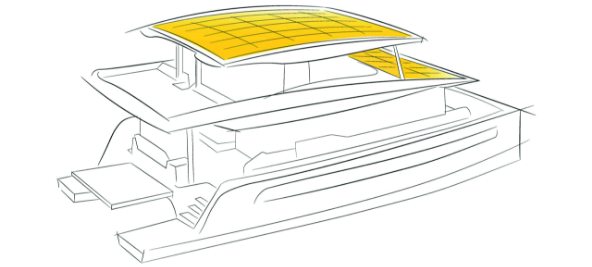
Solar panels
We employ the most efficient modules available, positioning them to capture the most solar energy possible.
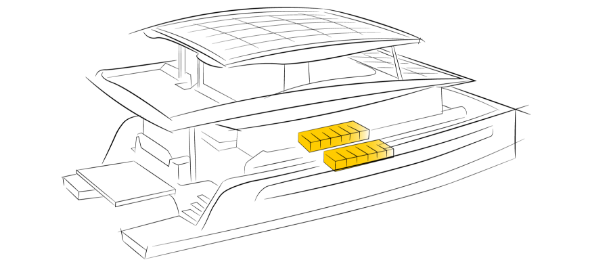
Batteries
Our water-cooled LFP batteries power both propulsion and household systems, with intelligent safety systems that ensure maximum reliability.
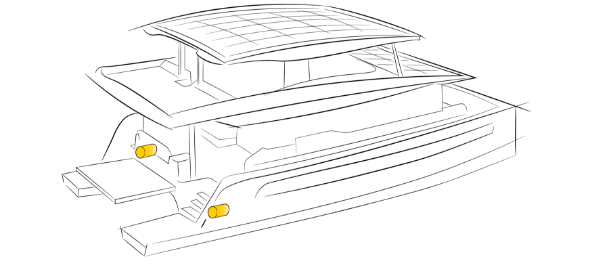
Electric motors
Our motors are compact, efficient and emission-free. Thanks to few moving parts, they require minimal maintenance.
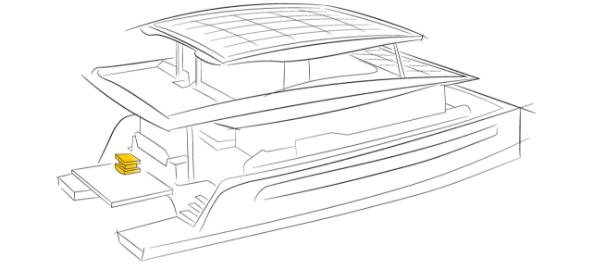
Range extender
The range extender recharges the batteries when the sun isn’t out. It never powers propulsion directly, so the yacht remains fully electric while navigating.
To keep your yacht up-to-date and performing at its best all the time, each of these components can be replaced or upgraded separately.
Yachts designed to capture the sun
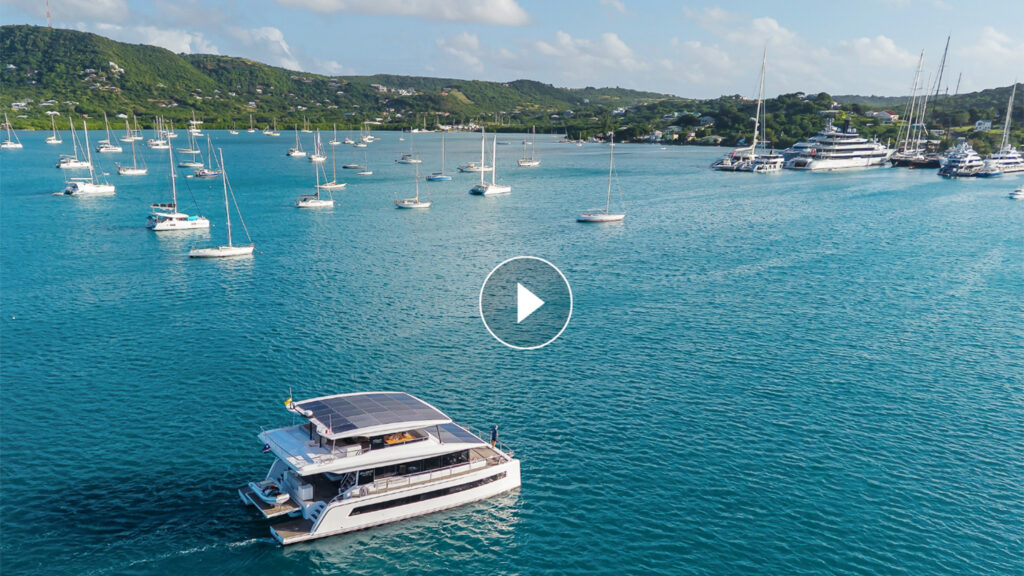
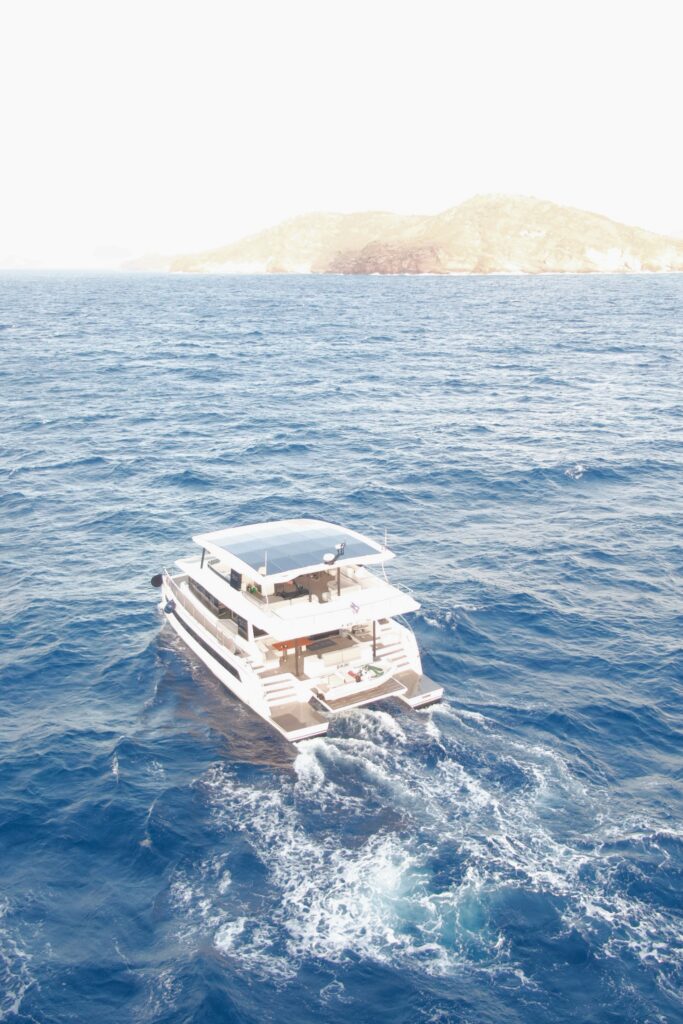
As solar-electric propulsion becomes increasingly popular, it’s worth remembering one thing: not all electric yachts are created equal. Silent yachts are not conversions of traditional boats: they are designed from the start to be powered by solar energy.
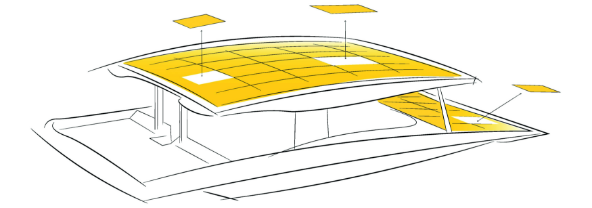
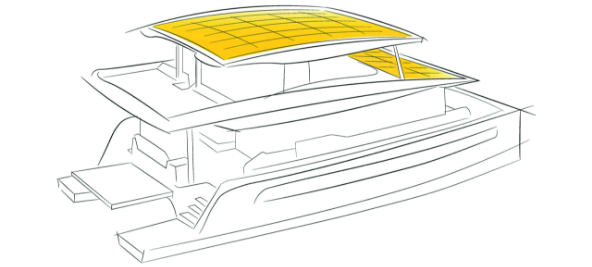
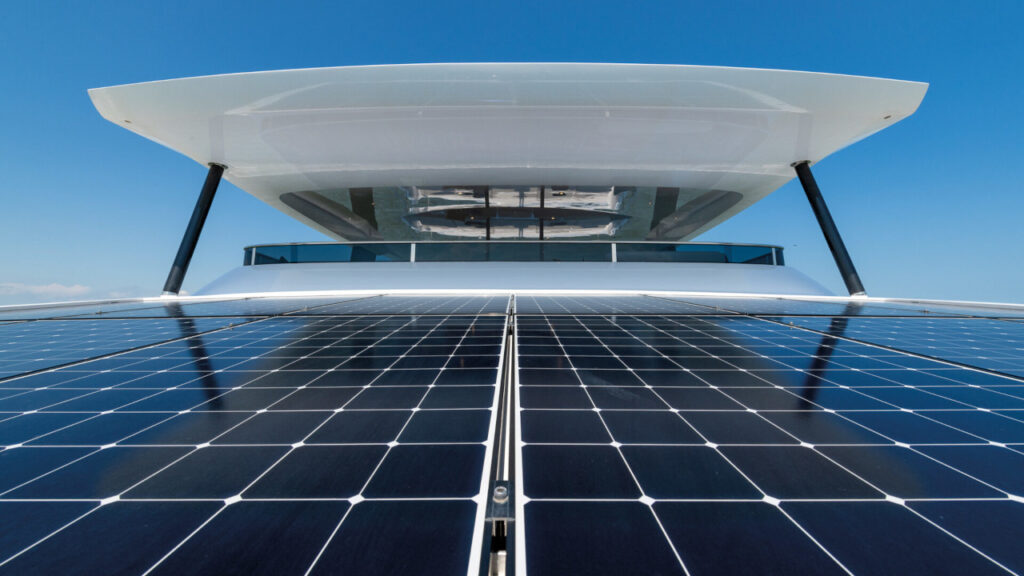
Capturing maximum amounts of solar energy requires a large area of photovoltaic cells, positioned to face the sun as efficiently as possible. The top surface of a catamaran can be perfectly suited to this need, at least when the yacht is a multi-hull engineered specifically for that purpose. Just like ours.
Modular installation
Our modular installation makes it easy to replace individual panels for maintenance or for future upgrades. In contrast, solar panels that are directly integrated into the hull or glued onto the roof are not designed to be replaced when necessary.
Rooftop positioning
Placing the panels horizontally on the top allows the yacht to optimize energy harvesting. Compared to vertical panels integrated into the hull, this positioning captures more energy while also protecting the solar cells from damage.
Zero shade principle
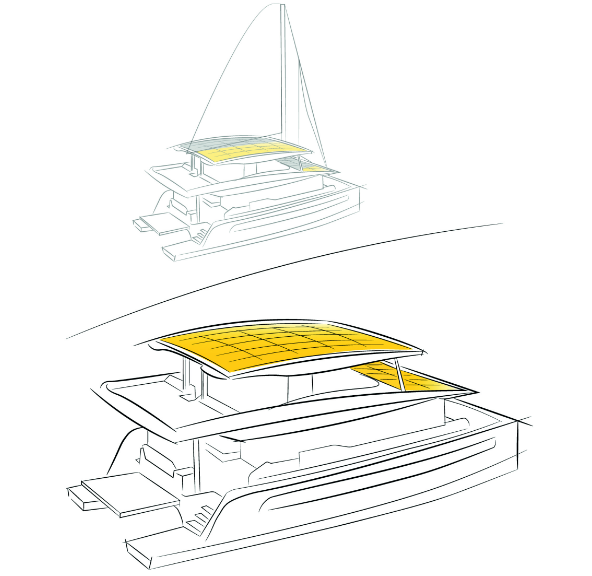
Silent Yachts intentionally exclude sails or wind turbines, as they can cause partial shading that can significantly reduce energy output and efficiency. On our catamarans no elements cast shade, maximizing the harnessing of solar energy.
Market-leading panels
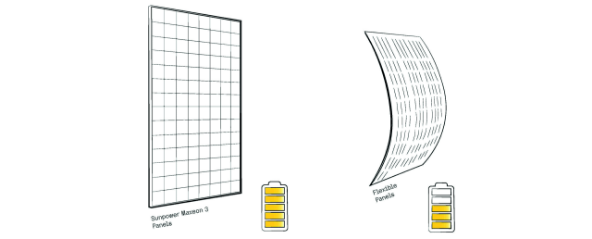
The rigid glass solar panels we use offer market-leading efficiency. Flexible panels mounted on curved surfaces or integrated into the hull are generally less efficient, and have a much shorter lifespan.
Do you have any questions? Let us know in the comment section below.
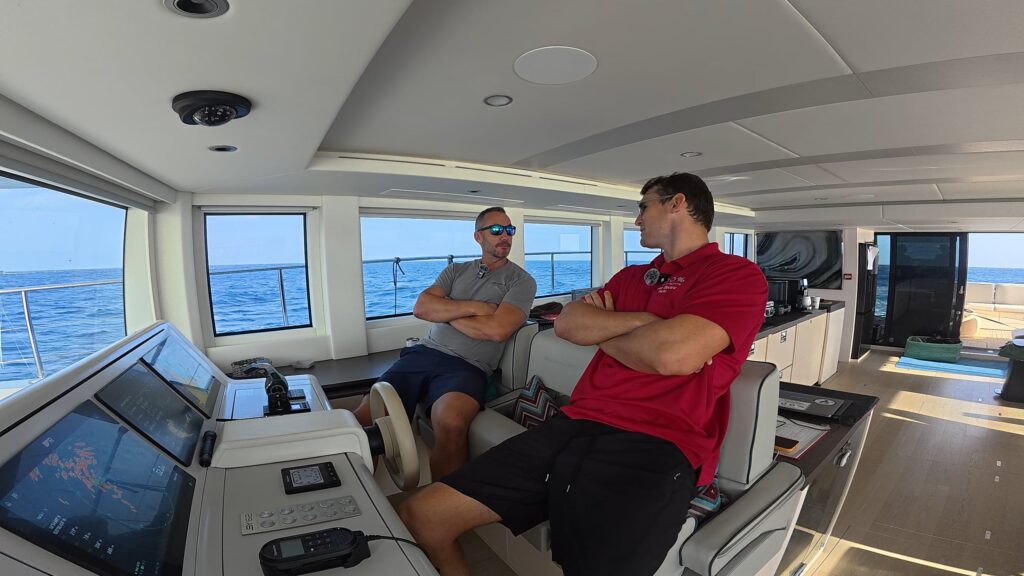
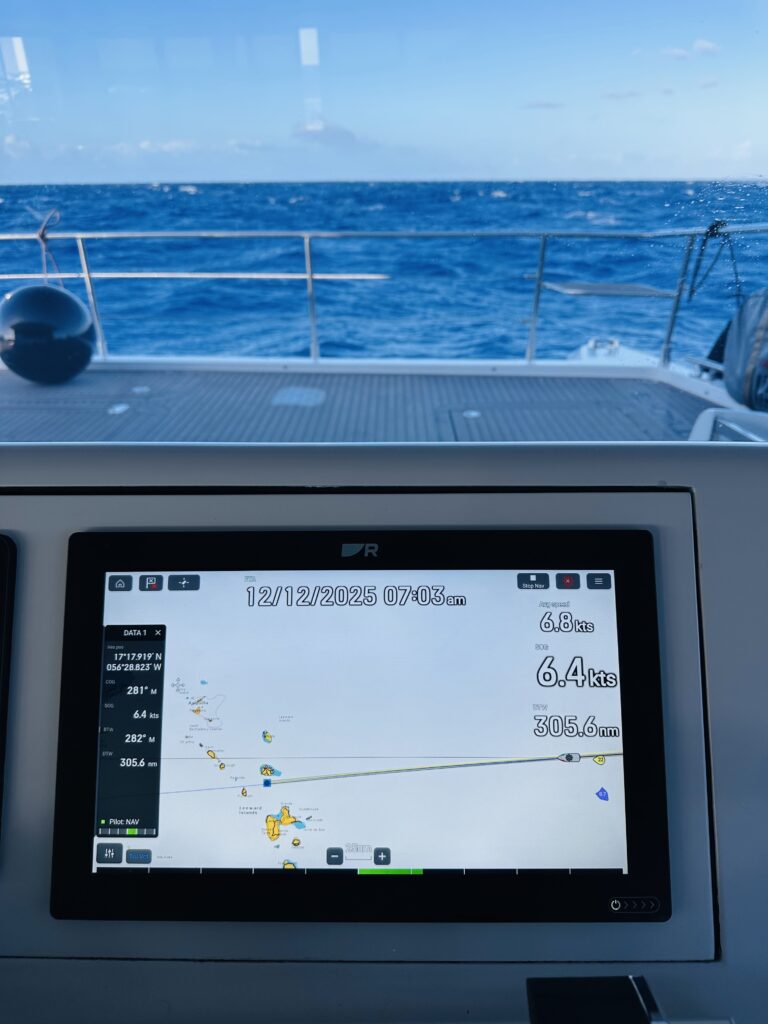
Honestly, I see the SY series of vessels as self sufficient, modular homes on water. That’s been my draw ever since I first learned about them some years ago! On your current journey, would you please touch on the routine / periodic maintenance requirements of such a home? Maybe there’s water-maker filters that must be cleaned or other time based checks that must be made throughout the boat to ensure optimal functionality and efficiency. Also, can the black/brown water tank sustain an Atlantic passage without purging? Thanks again guys!
Hi Jeffrey
There is a full electronic maintenance system coming online in the next few months, which will create a full history of the yacht’s maintenance work completed.
Most of the maintenance on board is inspection rather than maintenance.
The black tanks are capable of holding a large volume, but we chose to discharge in accordance with MARPOL regulations.
Thanks